For most students, getting a good job after graduation is one of the biggest goals of their academic journey. Colleges and universities also understand that their success is not measured only by academic results but by how well they prepare students for professional careers.
However, managing campus placements is not always easy. Placement departments regularly coordinate with multiple companies, manage student applications, schedule interviews, verify eligibility, and maintain recruitment records. When all these activities are handled through spreadsheets, emails, and manual paperwork, even a small mistake can create unnecessary delays.
This is where Placement Management Software can make a real difference.
Why Traditional Placement Management Needs an Upgrade
In many educational institutions, placement officers spend a significant amount of time performing repetitive administrative tasks. Updating student records, sharing job notifications, collecting resumes, and preparing placement reports can become difficult, especially when hundreds or thousands of students are involved.
Some common challenges include:
- Maintaining accurate student placement records.
- Communicating job opportunities to eligible students.
- Managing multiple company recruitment drives.
- Tracking applications and interview schedules.
- Collecting and updating student resumes.
- Preparing department-wise placement reports.
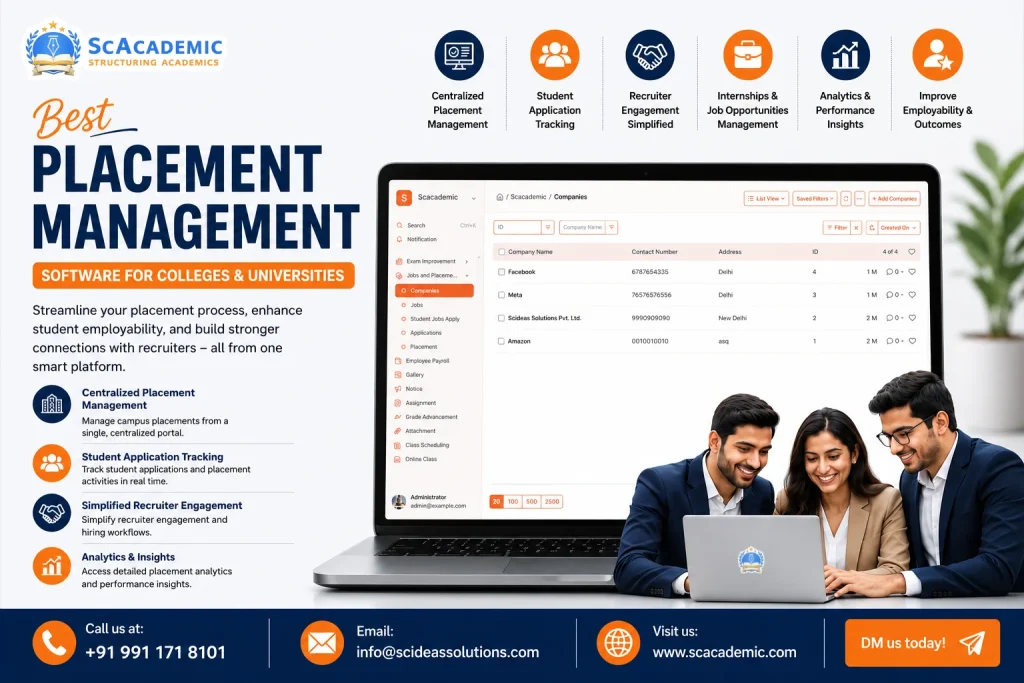
A centralized digital platform helps institutions manage these activities in a more organized way.
One Platform for Students, Recruiters and Placement Teams
A good placement management system connects students, recruiters, and placement officers through a single platform.
Placement officers can maintain company profiles, publish job openings and define eligibility criteria. Students can access relevant opportunities and apply without depending on repeated manual communication.
Recruiters can review applications, shortlist candidates, and manage interview schedules. This creates a smoother recruitment experience for everyone involved.
Helping Students Find the Right Opportunities
Not every job opportunity is suitable for every student. Eligibility may depend on academic performance, department, specialization, skills, and qualifications.
Placement software can display opportunities based on predefined eligibility conditions. This helps students focus on relevant openings rather than applying randomly.
It also saves recruiters time by reducing applications from candidates who do not meet the basic requirements.
Simplifying Resume and Application Management
Resume management is another important part of campus recruitment.
Students frequently update their resumes as they gain new skills, complete internships or work on academic projects. A digital placement portal allows students to maintain their profiles and upload updated documents in one place.
When applying for a job, students can use their latest resume, while placement teams and recruiters can access the required information without requesting documents repeatedly.
Better Communication and Application Tracking
One common concern among students is not knowing what happens after submitting a job application.
A placement management platform provides application status updates, interview notifications, shortlisting information, and selection announcements.
Students can follow their recruitment progress through a personalized dashboard. Placement officers also spend less time answering routine status-related questions.
Understanding Placement Performance Through Reports
Accurate placement data is important for every educational institution.
With reporting and analytics, colleges can monitor placement percentages, company participation, internship records, department-wise performance, and student selection statistics.
These reports help management understand which departments are performing well and where additional career development support may be required.
Choosing the Right Placement Management Software
Before selecting a placement management solution, institutions should consider their actual requirements. Important factors include ease of use, student data management, recruiter access, automated notifications, reporting capabilities and scalability.
The software should simplify existing processes rather than introduce additional administrative complexity.
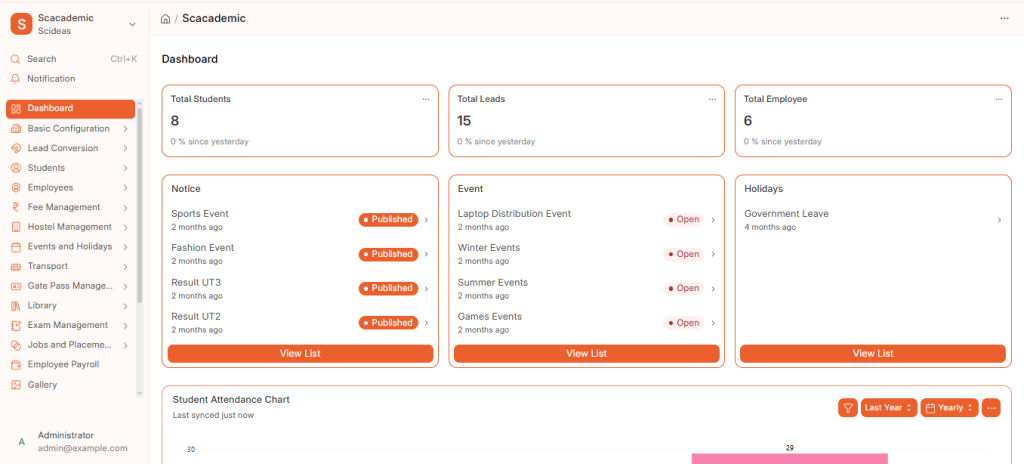
Solutions such as ScAcademic Placement Management Software are designed to bring student profiles, recruitment activities, internship opportunities, employer engagement, and placement reporting together in one digital ecosystem.
Conclusion
Campus recruitment is an important responsibility, and managing it efficiently requires more than spreadsheets and email communication.
The right placement management software can help colleges and universities save administrative time, improve communication, maintain accurate records, and provide students with better access to career opportunities.
Ultimately, the goal is not simply to manage placements digitally. It is to create a more transparent and organized environment where students, recruiters, and educational institutions can work together towards better career outcomes.