
Transportation is one of the most important parts of running a school, college, or any organization that provides travel facilities. Every day, hundreds or even thousands of students and employees depend on transportation services to reach their destination on time.
But managing transportation is not always easy. From assigning vehicles and drivers to planning routes, tracking expenses, and maintaining records, there are several responsibilities involved.
Many institutions still handle these activities through registers, phone calls, spreadsheets, and manual coordination. While these methods may work for a small number of vehicles, they often become difficult to manage as operations grow.
This is where Transport Management Software can make a real difference.
Why Is Manual Transport Management Becoming Difficult?
Imagine a school operating 15 buses across different routes. Every morning, the transport department needs to ensure that the right bus reaches the right location, drivers follow their assigned routes, and students are picked up according to the schedule.
Now consider what happens when a driver is absent, a vehicle needs maintenance, or a student changes their pickup location.
Without a centralized system, staff members may need to make multiple phone calls, update records manually, and inform different departments about the changes.
Such situations can lead to confusion, delays, and unnecessary administrative work.
A digital transport management solution helps bring these activities together in one place.
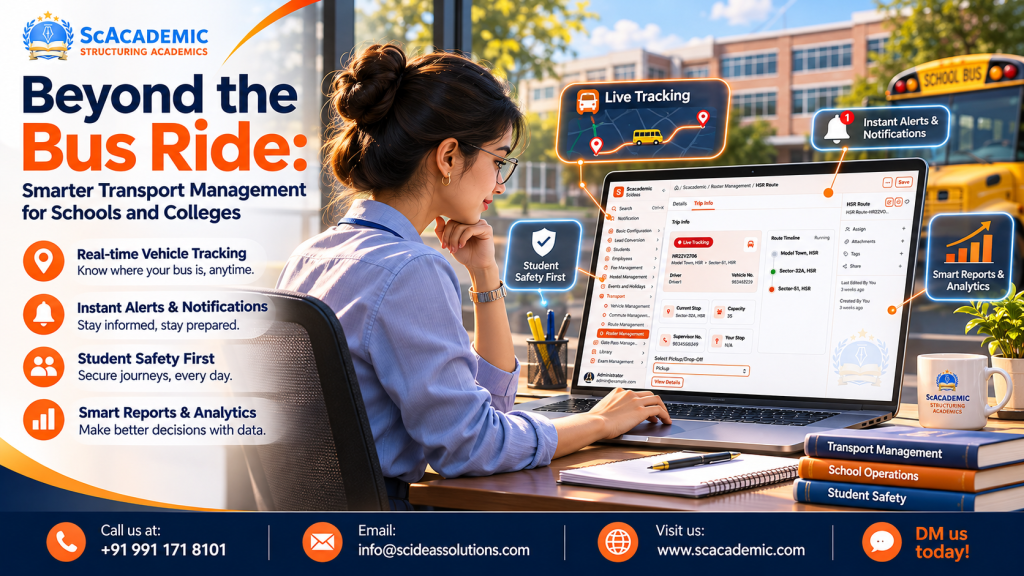
How Transport Management Software Helps
A good transport management system is not just about managing buses. It helps institutions organize their complete transportation operations.
1. Vehicle Management
Maintaining vehicle records is essential for smooth operations. Software allows administrators to store registration details, vehicle numbers, seating capacity, insurance information, fitness certificates, and maintenance history.
Instead of searching through files, staff can access vehicle information whenever required. Maintenance reminders also help institutions plan servicing before unexpected breakdowns occur.
2. Driver and Staff Management
Driver information is another important part of transportation management.
Institutions can maintain records of driving licenses, contact details, experience, assigned vehicles, and route responsibilities. This makes it easier to manage driver assignments and ensure that important documents are up to date.
3. Better Route Planning
Route planning directly affects travel time and fuel expenses.
Transport Management Software helps administrators organize pickup and drop locations, assign vehicles to routes, and make changes when transportation requirements change.
For example, if a new student joins a school from a different location, the transport department can review the existing routes and update the allocation accordingly.
4. Student and Passenger Allocation
Managing passenger details manually can become complicated, especially in large institutions.
A digital system makes it easier to assign students and staff members to specific buses and routes. Administrators can also check seating capacity and avoid unnecessary overcrowding.
5. Maintenance and Expense Tracking
Fuel expenses, servicing costs, repairs, and other vehicle-related expenses can have a significant impact on an institution’s transportation budget.
Keeping these records digitally helps management understand where money is being spent and identify opportunities to control operational costs.
The Importance of Transportation Safety
Safety should always be a priority when managing transportation, particularly for schools.
Parents want to know that their children are travelling through a properly organized transport system. Institutions also need to ensure that vehicles are maintained and drivers have the necessary documents.
A transport management system helps maintain organized records and makes it easier to monitor vehicle maintenance, driver information, and passenger assignments.
Depending on the software, additional features such as GPS tracking, live vehicle location, and automated notifications can also help improve transportation visibility.
However, technology works best when supported by proper safety policies and regular monitoring.
Why Should Schools and Colleges Consider Digital Transport Management?
As educational institutions expand, managing transportation through separate registers and spreadsheets becomes increasingly difficult.
A centralized system offers several practical advantages:
- Reduces repetitive paperwork and manual data entry.
- Makes vehicle and driver information easier to access.
- Simplifies route and passenger management.
- Helps track maintenance and transportation expenses.
- Improves coordination between administrative departments.
- Provides better visibility into daily transport operations.
Another advantage is that transportation data can be connected with other institutional activities through an integrated ERP system. This reduces duplicate work and helps departments coordinate more effectively.
Choosing the Right Transport Management Software
Before selecting any transport management solution, institutions should understand their actual requirements.
A small school may need basic vehicle, driver, and route management, while a large university may require multiple campus management, GPS tracking, detailed reporting, and integration with student information systems.
The software should be easy to use, flexible enough to support future growth, and capable of generating useful reports.
It is also important to check whether the solution offers technical support, data security, and customization options.
Conclusion
Transportation management is not simply about operating buses or arranging daily routes. It involves coordination, safety, planning, and continuous monitoring.
When these activities are managed manually, even small changes can create additional work for administrative teams.
Transport Management Software provides a more organized approach by bringing vehicle records, driver details, route planning, passenger allocation, and maintenance information together.
For schools, colleges, and other educational institutions looking to improve their daily operations, moving from manual transportation management to a digital system can be a practical step towards better efficiency and reliability.