In the modern education ecosystem, institutions are constantly striving to improve student outcomes, enhance infrastructure, and adopt new technologies. Yet, one critical factor often remains underestimated—faculty well-being. A campus can only truly thrive when its educators feel supported, valued, and free to focus on what they do best: teaching and mentoring. When administrative burdens pile up, even the most passionate teachers can feel overwhelmed. Reducing this pressure is no longer optional; it’s essential for building a progressive and high-performing academic environment.
At the heart of this challenge lies the concept of “cognitive load.” Teachers are not just educators; they are mentors, evaluators, coordinators, and sometimes even counselors. Adding repetitive administrative tasks such as leave applications, attendance tracking, and profile updates only increases mental fatigue. Over time, this impacts productivity, job satisfaction, and ultimately, the quality of education delivered. A streamlined approach that simplifies these processes can significantly transform the faculty experience.
Reducing Cognitive Load Through Smart Systems
Cognitive load refers to the total mental effort being used in working memory. For faculty members, unnecessary administrative complexity adds to this burden, leaving less room for creative teaching and meaningful student engagement. When systems are fragmented or outdated, even simple tasks become time-consuming and frustrating. Logging into multiple platforms, filling repetitive forms, or waiting for approvals through manual channels can disrupt the flow of an educator’s day.
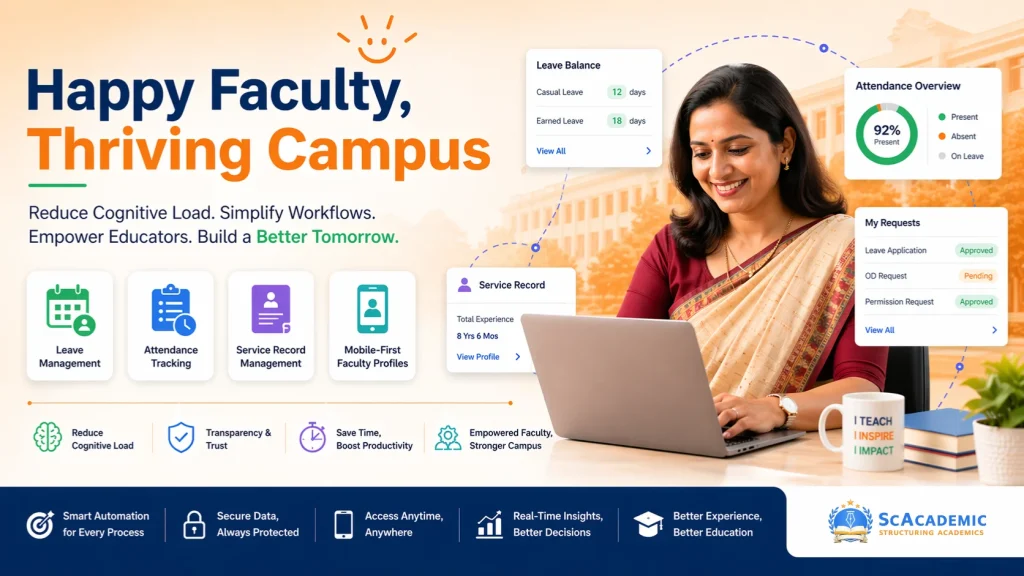
A unified HR portal addresses this challenge by centralizing all faculty-related processes into a single, intuitive interface. Instead of juggling between disconnected systems, teachers can manage their responsibilities seamlessly in one place. This not only reduces time spent on non-academic tasks but also creates a smoother, more organized workflow. The result is a noticeable improvement in efficiency and a significant reduction in stress levels among faculty members.
Building Transparency in Leave and Attendance
One of the most common pain points for faculty is the lack of clarity in leave and attendance management. Traditional systems often involve manual entries, delayed approvals, and limited visibility into records. This can lead to confusion, disputes, and unnecessary follow-ups, adding to the workload of both faculty and administrative staff.
A transparent, digital system transforms this experience. With real-time access to leave balances, attendance logs, and approval statuses, faculty members gain complete visibility into their records. This eliminates guesswork and builds trust within the institution. When teachers no longer need to chase updates or worry about discrepancies, they can focus more on academic responsibilities, contributing to a more positive and productive campus culture.
Key advantages include:
- Real-time leave balance visibility
- Instant attendance updates
- Faster approval workflows
- Reduced manual errors
- Improved trust between faculty and administration
Precision-Engineered Service Record Tracking
Maintaining accurate service records is crucial for any educational institution. From promotions and appraisals to compliance and reporting, these records play a vital role in faculty management. However, manual tracking methods are prone to errors, inconsistencies, and data loss. Over time, this can create serious challenges during audits or performance evaluations.
A unified HR portal ensures that service records are maintained with precision and consistency. Every detail, from joining dates and role changes to achievements and certifications, is recorded systematically. This not only improves data accuracy but also simplifies access whenever needed. Faculty members can view their professional journey at a glance, while administrators benefit from reliable data for decision-making and reporting.
What makes it powerful:
- Centralized and secure faculty data
- Automated record updates
- Easy access for audits and reviews
- Accurate history of roles and achievements
- Better decision-making with reliable insights
Empowering Faculty with Mobile-First Profiles
In an increasingly mobile-driven world, accessibility plays a key role in user experience. Faculty members are often on the move—switching between classrooms, meetings, and personal commitments. Systems that are not optimized for mobile devices can create unnecessary friction, limiting usability and convenience.
A mobile-first HR portal changes this dynamic by bringing essential features directly to faculty members’ fingertips. Whether it’s updating personal details, applying for leave, or checking attendance records, everything can be done quickly and effortlessly from a smartphone. This flexibility not only saves time but also empowers educators to stay connected without disrupting their schedules.
Mobile-first benefits:
- Anytime, anywhere access
- Quick profile updates
- Seamless leave applications
- Instant notifications and alerts
- Improved user experience and adoption
Creating a Culture of Trust and Efficiency
When administrative processes are simplified, the benefits extend far beyond individual convenience. A unified HR system fosters a culture of transparency, accountability, and trust within the institution. Faculty members feel more in control of their responsibilities, while administrators can manage operations more effectively. This alignment creates a harmonious work environment where everyone is focused on shared goals.
Moreover, reducing cognitive load has a direct impact on teaching quality. When educators are less stressed and more organized, they can dedicate more energy to lesson planning, student interaction, and professional development. This ripple effect enhances the overall academic experience, leading to better student outcomes and a stronger institutional reputation.
Why It Matters for Modern Institutions
As education continues to evolve, institutions must recognize that faculty satisfaction is a key driver of success. Investing in systems that simplify workflows is not just a technological upgrade; it’s a strategic decision. A unified HR portal represents a shift towards smarter, more human-centric operations, where technology supports people rather than overwhelming them.
For institutions aiming to stay competitive and future-ready, prioritizing faculty well-being is essential. By reducing administrative complexity and enabling seamless interactions, colleges and universities can create an environment where educators thrive. And when faculty thrive, the entire campus benefits—from students to administrators and beyond.
Conclusion
A happy faculty is the foundation of a thriving campus. By reducing cognitive load and simplifying administrative processes through a unified HR portal, institutions can unlock the true potential of their educators. Transparent leave and attendance logs, accurate service record tracking, and mobile-first accessibility are not just features—they are enablers of a better academic ecosystem.
In the end, empowering teachers means empowering education itself. When faculty members are free to focus on what truly matters, they inspire excellence, innovation, and growth across the campus. That is the kind of transformation every modern institution should strive for.